The Advantages of AI in Customer Service
Business is leveraging AI to transform their customer service operations. and has become a critical component of effective customer support strategies. By implementing AI-powered solutions, organizations are experiencing significant improvements in efficiency, customer satisfaction, and operational costs. This article examines the advantages that AI brings to business customer service, and how these technologies are creating more responsive, personalized, and effective support experiences while also reducing organizational burdens.
Enhanced Availability
One of the most significant advantages of AI in customer service is its ability to provide continuous 24/7 support. Unlike human agents who require rest periods and work within scheduled hours, AI systems operate perpetually, ensuring customers receive immediate assistance whenever needed.
According to Sprout Social, AI tools enable round-the-clock customer support without requiring human intervention, addressing a critical gap in traditional service models[1]. This continuous availability aligns perfectly with modern consumer expectations for instant service. Zendesk reports that 51 percent of consumers prefer interacting with bots when seeking immediate assistance, highlighting how AI meets the growing demand for always-available support[3].
For global business serving customers across multiple time zones, this level of availability eliminates long wait times, and ensures customers never receive unresponsive service regardless of when they choose to engage.
Enhanced Support Scalability
AI customer service solutions excel at handling fluctuating demand without the challenges of scaling human support teams. These systems can process large volumes of inquiries simultaneously, maintaining consistent performance during peak periods when human teams would typically become overwhelmed[1]. This scalability advantage is particularly valuable during seasonal surges, product launches, or unexpected spikes in customer inquiries.
According to Plivo, AI helps address common customer service challenges by making support tasks easier and quicker, allowing businesses to manage higher volumes effectively[2]. The ability to scale support operations without proportionally increasing headcount represents a fundamental transformation in customer service resource management.
Organizations can maintain high-quality service experiences during growth phases without the traditional lag time associated with recruiting and training new support personnel. This elastic capacity ensures businesses can confidently expand into new markets or launch promotional campaigns without concerns about overwhelming their support infrastructure.
Operational Improvements using Automation
AI transforms operations within customer service by automating routine repetitive tasks that traditionally require substantial agent time without adding value. According to Sprout Social, AI automation is assigned manual processes and tasks, allowing customer care agents to focus on more complex, value-added activities[1]. Common examples include password resets, order status inquiries, account updates, and basic information requests. By handling these high-volume, straightforward tasks, AI frees human agents to engage with issues requiring emotional intelligence, complex problem-solving, and nuanced customer interactions.
Moveworks demonstrates this benefit through their case study with Leidos, where implementing AI assistants saved over 3,000 productivity hours monthly by automating repetitive tasks across the organization[4]. This reallocation of human resources to higher-value work not only improves operational efficiency but also enhances job satisfaction by allowing service professionals to engage in more meaningful, challenging work rather than repetitive question-answering.
Reduced Handling Times and Improved Resolution Rates
AI solutions significantly improve key customer service metrics by streamlining interactions and enhancing agent capabilities. VoiceSpin notes that AI integration reduces Average Handle Time (AHT) and increases First Call Resolution (FCR) rates through intelligent routing that connects customers with the most appropriate representatives and provides agents with AI-assisted tools during interactions[5].
These improvements directly address a critical customer expectation, as Salesforce research indicates 83% of consumers expect to resolve complex issues by speaking with just one person, yet only 13% report this experience[5]. AI achieves these improvements through several mechanisms: predictive routing based on issue type and agent expertise, real-time information retrieval during customer interactions, and automatic documentation that eliminates manual note-taking.
Additionally, AI provides agents with contextual customer information and suggested resolutions based on similar past cases, enabling faster, more accurate responses. These efficiency gains create a virtuous cycle where reduced handling times increase available capacity, further enhancing the organization's ability to provide prompt, effective service across all customer touchpoints.
The AI Revolution in Customer Service and Support: A Practical Guide to Impactful Deployment of AI to Best Serve Your Customers
Unlock the secrets to using AI effectively to enhance your customer interactions and boost satisfaction
Product information
$44.99 $33.56
Product Review Score
4.38 out of 5 stars
207 reviewsProduct links
Marketing, Sales and Service with AI
Unlock the secrets to leveraging AI for enhancing customer satisfaction and driving business growth
Product information
$19.00
Product Review Score
4.21 out of 5 stars
130 reviewsProduct links

Customer 360: How Data, AI, and Trust Change Everything
Discover how to leverage data and AI to build stronger customer relationships and drive business success
Product information
$28.00
Product Review Score
4.53 out of 5 stars
70 reviewsProduct links
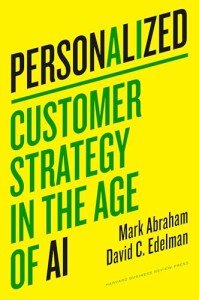
Personalized: Customer Strategy in the Age of AI
Unlock The Secrets to Tailoring Your Business Approach with AI-Driven Insights
Product information
$32.00 $19.30
Product Review Score
4.33 out of 5 stars
169 reviewsProduct links
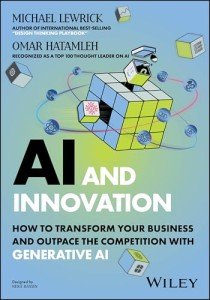
AI and Innovation: How to Transform Your Business and Outpace the Competition with Generative AI
Unlock the secrets to leveraging AI for growth and staying ahead in today’s fast-paced business world
Product information
$35.00 $25.42
Product Review Score
4.59 out of 5 stars
11 reviewsProduct links
Enhanced Data-Driven Personalization
AI systems transform customer service interactions through sophisticated personalization capabilities that create more relevant, contextual experiences. By analyzing comprehensive customer data—including purchase history, previous interactions, browsing behavior, and demographic information—AI creates detailed customer profiles that inform tailored service approaches. According to Zendesk, AI enables hyper-personalized interactions by arming agents with insights that help them understand each customer's unique situation and needs[3].
For example, Liberty London uses Zendesk AI to identify and label customer intent, sentiment, and language, providing agents with greater insight into individual customer requirements[3]. This level of personalization extends beyond simply addressing customers by name to include understanding their relationship history with the brand, anticipating potential concerns based on recent purchases, and adapting communication style to match customer preferences. The resulting experiences feel remarkably responsive to individual needs rather than generically scripted, fostering stronger emotional connections between customers and brands that drive loyalty and satisfaction.
Proactive Service and Issue Prevention
AI has transformed customer service from a predominantly reactive function to one capable of anticipating needs and preventing problems before they impact customers. By analyzing patterns in customer data, AI can identify potential issues and enable proactive interventions that resolve problems before customers need to report them.
Zendesk highlights how AI can use data such as order history, behaviors, and preferences to anticipate customer needs and identify potential problems, allowing businesses to generate proactive solutions and improve customer retention[3]. For example, Motel Rocks implemented Zendesk AI to streamline operations with intelligent triage and sentiment analysis, automatically classifying incoming messages based on customer intent and emotional tone[3]. This proactive approach extends to predictive analytics that identify customers at risk of churning, enabling targeted retention efforts before relationships deteriorate.
Similarly, AI can detect unusual patterns that might indicate service issues, product defects, or billing problems, allowing resolution before they affect larger customer segments. This shift from reactive to proactive service represents a fundamental evolution in customer support philosophy, positioning service teams as strategic partners in customer success rather than simply problem-resolvers.
Enhanced Business Intelligence
AI systems transform raw customer interaction data into actionable intelligence that informs strategic decision-making across the organization.
According to Sprout Social, over 40% of business leaders consider sentiment analysis a key AI application for understanding customer feedback, providing insights that benefit multiple teams beyond customer service, including product development, procurement, and marketing[1]. These AI-powered analytics tools process vast quantities of unstructured data from customer interactions—including chat transcripts, call recordings, emails, and social media engagements—to identify trends, common issues, and emerging opportunities.
Zendesk describes how AI-powered tools enable customer support teams to track and analyze unstructured data like customer sentiment to identify high churn risk and immediately address concerns[3]. The resulting insights extend far beyond traditional customer service metrics to inform product development priorities, marketing message refinement, and operational improvements. This capability transforms customer service from a cost center into a strategic intelligence hub that drives continuous improvement and innovation based on authentic customer feedback.
Quality Assurance and Performance Optimization
AI introduces capabilities for objectively monitoring, measuring, and improving service quality across customer support operations. Traditional quality assurance often relied on limited sampling of interactions and subjective human evaluation, creating inconsistent assessment and feedback. AI-powered quality assurance systems analyze 100% of customer interactions against consistent criteria, identifying patterns and opportunities for improvement that would remain invisible through traditional monitoring approaches.
As Zendesk notes, "AI-powered quality assurance can objectively score agent performance, identify customer sentiment, and pinpoint areas where real-time coaching is needed based on data gathered from customer interactions"[3]. This comprehensive analysis allows businesses to identify trends, proactively address issues, and personalize training for agents to ensure consistent delivery of exceptional customer experiences.
Beyond agent performance, these systems also evaluate process effectiveness, identifying bottlenecks or friction points in customer journeys that might require redesign. The resulting continuous improvement cycle creates progressively more efficient, effective service experiences that adapt to evolving customer expectations and business requirements.

Agentic Artificial Intelligence: Harnessing AI Agents to Reinvent Business, Work and Life
Discover how AI can transform your business strategies and everyday life for the better
Product information
$30.90 $29.36
Product Review Score
4.43 out of 5 stars
52 reviewsProduct links
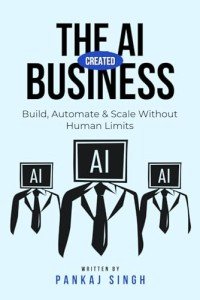
The AI-Created Business: Build, Automate & Scale Without Human Limits
Unlock the secrets to leveraging AI for effortless business growth and automation
Product information
$14.99
Product Review Score
4.94 out of 5 stars
68 reviewsProduct links
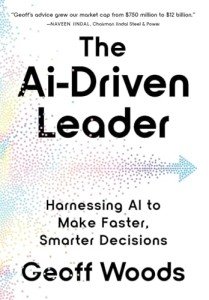
The AI-Driven Leader: Harnessing AI to Make Faster, Smarter Decisions
Unlock the secrets to leveraging artificial intelligence for impactful decision-making and leadership success
Product information
$24.99 $22.49
Product Review Score
4.93 out of 5 stars
152 reviewsProduct links

Blue Goldfish 2.0: 8 Ways to Leverage AI and Data for Customer Loyalty & Marketing Innovation (Blue Goldfish 1.0 and 2.0)
Unlock the secrets to boosting customer loyalty and drive marketing success using AI and data insights
Product information
$19.95
Product Review Score
4.72 out of 5 stars
173 reviewsProduct links
The Age of Intent: Using Artificial Intelligence to Deliver a Superior Customer Experience
Discover how AI can transform your business and enhance customer satisfaction with actionable insights and strategies
Product information
$24.95 $17.59
Product Review Score
4.1 out of 5 stars
187 reviewsProduct links
Cost Optimization
Implementing AI in customer service delivers significant cost efficiencies while maintaining or improving service quality. Sprout Social notes that brands can "significantly reduce operational costs because of AI capabilities that help scale your social media customer service without additional staffing and training costs"[1]. This cost advantage stems from multiple factors: reduced staffing requirements for handling routine inquiries, decreased training costs through AI-assisted agent support, and lower infrastructure needs as digital channels replace more expensive voice interactions.
Zendesk similarly highlights reduced operational costs as a key benefit of AI in customer experience[3]. For organizations with substantial customer service operations, these savings can be considerable—particularly when accounting for the fully-loaded costs of human agents including recruitment, training, management overhead, facilities, and technology infrastructure.
Importantly, these cost reductions don't come at the expense of service quality, as AI simultaneously improves response times and resolution rates. The result is a rare opportunity to simultaneously reduce costs and enhance customer experiences, creating a compelling business case for AI investment that satisfies both financial and customer-centric organizational objectives.
Agent Efficiency and Satisfaction
AI transforms the agent experience by providing real-time assistance that enhances performance while reducing workload and stress. VoiceSpin identifies "higher efficiency of support agents" and "reduced agent workload and burnout" as key benefits of AI in customer service[5]. These improvements stem from AI tools that assist agents during customer interactions—providing relevant information, suggesting responses, automating documentation, and handling routine aspects of service delivery.
For example, Medallia implemented an AI assistant that freed their IT team from common support issues, with problems that originally took days to fix now resolved in seconds[4]. This assistance is particularly valuable for new agents, as Zendesk notes that "AI can act as a virtual assistant, giving new hires real-time tips and feedback while navigating customer service training"[3].
The resulting agent experience combines the cognitive support of AI with the uniquely human abilities to build relationships, show empathy, and handle complex situations—creating a symbiotic partnership that maximizes both technological and human potential. This improved work experience directly addresses the traditionally high turnover rates in customer service roles by making the work more engaging, less repetitive, and more focused on meaningful customer impact rather than routine question-answering.
Implementation Considerations
AI enables truly integrated omnichannel customer service by maintaining consistent experiences across multiple communication channels. As Zendesk explains, businesses can "use bots to answer common questions that come in through email, your website, Slack, and your various messaging apps"[6]. This integration allows customers to move seamlessly between channels while maintaining conversation context, creating coherent experiences regardless of how customers choose to engage.
For example, a customer might begin with a chatbot interaction on a website, transition to an email exchange, and later speak with a human agent by phone—with each touchpoint inheriting the full context of previous interactions. This capability addresses a critical customer frustration with traditional multichannel support, where customers often need to repeat information when changing channels.
The resulting smooth, connected experience aligns with evolving customer expectations for consistent service regardless of channel choice. As AI technology continues to mature, these integrations will become increasingly sophisticated, with predictive capabilities that anticipate which channel might best serve a customer's needs at different stages of their journey.
Multilingual Support and Global Accessibility
AI dramatically expands language support capabilities, enabling businesses to serve diverse customer populations without proportional increases in multilingual staffing. Sprout Social highlights that "AI tools like chatbots automatically translate and respond in different languages, breaking down language barriers. This makes it easier to support a wider customer base and helps brands explore new markets"[1].
This capability is particularly valuable for organizations with global operations or diverse customer bases, as traditional approaches to multilingual support required either maintaining teams with specific language skills or using third-party translation services—both expensive and often logistically challenging options. AI-powered translation delivers immediate, natural-sounding multilingual support that approaches the quality of native speakers while eliminating the complexities of managing multilingual human teams.
Beyond simple translation, advanced systems also account for cultural nuances and communication preferences that vary between regions, creating more culturally appropriate service experiences. For businesses with international growth ambitions, this capability enables market entry with appropriate customer support from day one, rather than facing the traditional delays associated with building local language support teams.
Conclusion
The integration of artificial intelligence into customer service operations represents a transformative opportunity for businesses seeking to enhance customer experiences while optimizing operational efficiency. The advantages span multiple dimensions: continuous availability through 24/7 support, unprecedented scalability without proportional resource expansion, improved efficiency through automation of routine tasks, enhanced personalization driven by comprehensive data analysis, and significant cost optimizations that maintain or improve service quality. These benefits directly address longstanding challenges in customer service delivery, including resource constraints during peak periods, inconsistent service quality, limited personalization at scale, and the high costs associated with traditional support models.
The strategic implementation of AI in customer service continues to create competitive advantages for forward-thinking organizations. Those successfully integrating these technologies are achieving higher customer satisfaction, improved operational metrics, and reduced service delivery costs. Perhaps most importantly, AI transforms the fundamental nature of customer service work—elevating human agents from routine information providers to relationship builders focused on complex problem-solving and emotional connection. This evolution creates more meaningful work experiences for service professionals while delivering the immediate, personalized support that modern customers expect.
While implementation challenges exist—particularly around seamless integration with existing systems, appropriate balance between automation and human touch, and maintaining data privacy—the advantages of AI in business customer service have proven substantial enough to make adoption increasingly essential for companies seeking competitive advantage in customer experience delivery.
As these technologies continue to mature, the capabilities gap between AI-enabled service organizations and traditional approaches will likely widen, making strategic adoption a critical priority for forward-looking business leaders.
Citations:
[1] 8 strategies for using AI for customer service in 2025 - Sprout Social https://sproutsocial.com/insights/ai-customer-service/
[2] How AI is Transforming Customer Service: Top 6 Benefits for 2025 https://www.plivo.com/cx/blog/benefits-of-ai-in-customer-service
[3] 13 ways AI will improve the customer experience in 2025 - Zendesk https://www.zendesk.com/blog/ai-customer-experience/
[4] The 7 Core Benefits and Advantages of Using AI in Business https://www.moveworks.com/us/en/resources/blog/the-emerging-benefits-of-ai-in-business
[5] How AI Benefits Customer Service in 2025 + Examples - VoiceSpin https://www.voicespin.com/blog/how-ai-benefits-customer-service-and-how-it-is-used-in-contact-centers/
[6] Top 22 benefits of chatbots for businesses and customers - Zendesk https://www.zendesk.com/blog/5-benefits-using-ai-bots-customer-service/
[7] AI in Customer Service: Everything You Need to Know - RingCentral https://www.ringcentral.com/us/en/blog/customer-service-ai/
[8] 12 Key Benefits of AI for Business | TechTarget https://www.techtarget.com/searchenterpriseai/feature/6-key-benefits-of-