Advantages of AI in business marketing
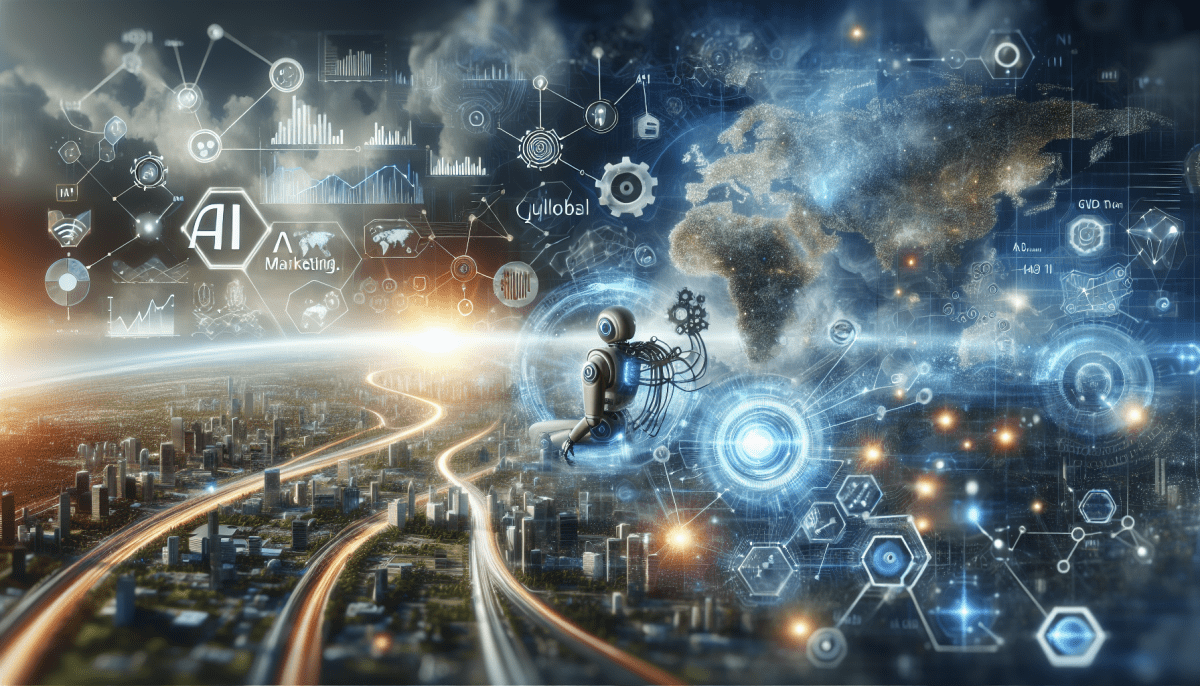
As artificial intelligence continues to evolve and mature, its integration into business marketing has revolutionized how companies connect with customers, optimize campaigns, and drive results.
AI has become an indispensable component of effective marketing strategies, enabling unprecedented levels of personalization, efficiency, and data-driven decision-making.
The technology has fundamentally transformed traditional marketing approaches, allowing businesses to create more targeted campaigns, streamline operations, and deliver exceptional customer experiences at scale.
This comprehensive analysis explores the multifaceted advantages that AI brings to business marketing, examining how these technologies are reshaping marketing strategies and delivering measurable business outcomes in an increasingly competitive landscape.
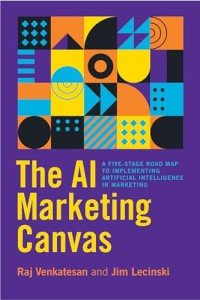
The AI Marketing Canvas
Unlock the secrets to harnessing AI for your marketing strategy with this step-by-step guide
Product information
$35.00 $23.74
Product Review Score
4.73 out of 5 stars
22 reviewsProduct links
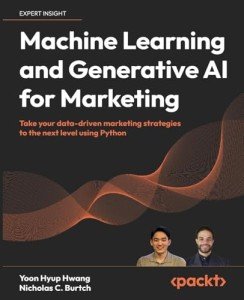
Machine Learning and Generative AI for Marketing
Unlock the power of cutting-edge technology to elevate your marketing game with practical insights and hands-on Python examples
Product information
$49.99 $34.99
Product Review Score
4.62 out of 5 stars
113 reviewsProduct links
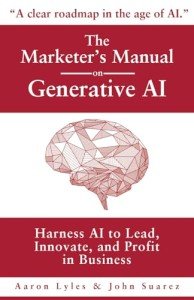
The Marketer's Manual on Generative AI
Unlock the secrets of leveraging AI to boost your marketing strategies and drive business success
Product information
$18.99
Product Review Score
4.73 out of 5 stars
128 reviewsProduct links
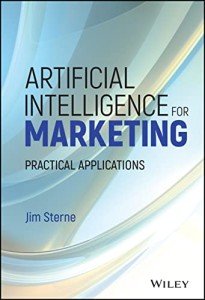
Artificial Intelligence for Marketing
Discover how AI can transform your marketing strategies with real-world examples and actionable insights
Product information
$52.00 $35.32
Product Review Score
4.2 out of 5 stars
103 reviewsProduct links
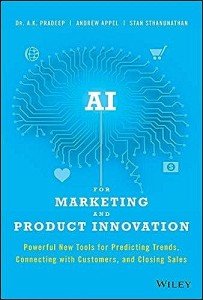
AI for Marketing and Product Innovation
Unlock the secrets of using AI to enhance your marketing strategies and drive product success
Product information
$29.00 $12.79
Product Review Score
4.24 out of 5 stars
190 reviewsProduct links
The Evolution of AI in Marketing
From Basic Automation to Intelligent Systems
The journey of AI in marketing has evolved significantly from its early applications in basic automation to today's sophisticated intelligent systems.
AI marketing primarily focused on recommendation engines, with companies like Amazon and Netflix pioneering the use of machine learning to analyze customer preferences and suggest relevant products or content[2].
These early implementations demonstrated the potential of AI to enhance customer experiences through data analysis.
As technology advanced, AI marketing capabilities expanded beyond simple recommendations to encompass comprehensive marketing solutions that could analyze complex data patterns, predict consumer behavior, and optimize campaigns in real-time.
The progression from rule-based systems to advanced machine learning algorithms marked a significant turning point, enabling marketers to move beyond reactive strategies to proactive, predictive approaches that anticipate customer needs before they emerge[3].
This evolution has fundamentally changed how marketing teams operate, transitioning from intuition-based decision making to data-driven strategies that leverage AI's computational power to identify opportunities and optimize campaigns with unprecedented precision.
The Current AI Marketing Landscape
AI has become deeply integrated into the marketing ecosystem, with its applications extending across virtually every aspect of the customer journey.
As McKinsey research highlighted, AI is positioned to transform marketing functions by boosting performance and efficiency[2]. The current landscape is characterized by the widespread adoption of generative AI, which has created new possibilities for content creation, campaign optimization, and customer engagement.
This technology enables marketers to analyze vast datasets and generate personalized content at scale, fundamentally changing how brands communicate with their audiences.
According to PwC, the impact of AI deployment in business is projected to add $15.7 trillion to the global economy by 2030, with marketing being one of the key areas benefiting from this transformation[2].
The hyper-growth period of AI in marketing has been particularly evident in recent years, with advances in natural language processing, computer vision, and predictive analytics creating new opportunities for innovative marketing approaches.
The integration of AI across marketing channels has created interconnected systems that work together to deliver cohesive customer experiences while optimizing marketing performance through continuous learning and adaptation.
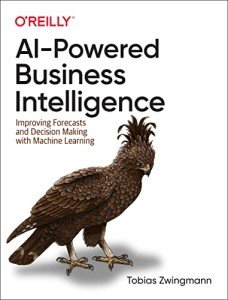
AI-Powered Business Intelligence: Improving Forecasts and Decision Making with Machine Learning
Harness the power of AI and machine learning to enhance your business strategies and outsmart the competition
Product information
$65.99 $40.35
Product Review Score
4.78 out of 5 stars
80 reviewsProduct links
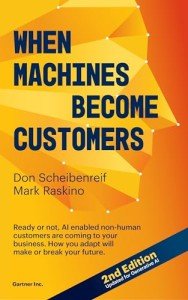
When Machines Become Customers: Ready or not, AI enabled non-human customers are coming to your business. How you adapt will make or break your future.
Discover essential strategies to embrace the rise of AI customers and transform your business for tomorrow's challenges
Product information
$15.00
Product Review Score
4.65 out of 5 stars
208 reviewsProduct links
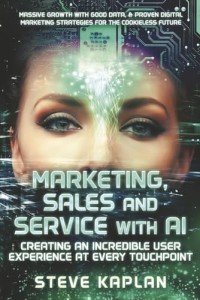
Marketing, Sales and Service with AI
Unlock the secrets to leveraging AI for enhancing customer satisfaction and driving business growth
Product information
$19.00
Product Review Score
4.21 out of 5 stars
130 reviewsProduct links
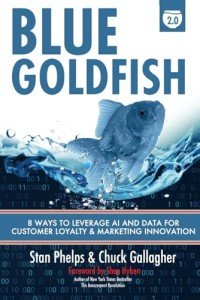
Blue Goldfish 2.0: 8 Ways to Leverage AI and Data for Customer Loyalty & Marketing Innovation (Blue Goldfish 1.0 and 2.0)
Unlock the secrets to boosting customer loyalty and drive marketing success using AI and data insights
Product information
$19.95
Product Review Score
4.72 out of 5 stars
173 reviewsProduct links
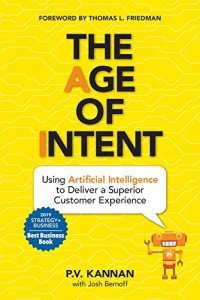
The Age of Intent: Using Artificial Intelligence to Deliver a Superior Customer Experience
Discover how AI can transform your business and enhance customer satisfaction with actionable insights and strategies
Product information
$24.95 $17.59
Product Review Score
4.1 out of 5 stars
187 reviewsProduct links
Personalization Advantages
Hyper-Personalization Through Predictive Analytics
One of the most significant advantages of AI in marketing is its ability to deliver hyper-personalized experiences through predictive analytics.
Unlike traditional personalization that relies on basic segmentation, AI-powered marketing uses sophisticated algorithms to analyze vast amounts of data across multiple dimensions, including purchase history, browsing behavior, and engagement patterns.
This comprehensive analysis enables marketers to understand individual customer preferences at a granular level and tailor experiences accordingly[3].
Predictive analytics has become the driving force behind personalization strategies, allowing marketers to anticipate customer needs before they even arise[3].
This predictive capability represents a fundamental shift from reactive to proactive marketing, where brands can engage customers with relevant offers at precisely the right moment in their journey.
For example, e-commerce companies can use AI to predict when customers might need specific products based on their purchase history and browsing patterns, enabling them to deliver timely recommendations that feel intuitive rather than intrusive[3].
The result is a marketing approach that not only responds to customer actions but anticipates their future needs, creating experiences that feel remarkably personalized and relevant.
Customer-Centric Engagement at Scale
AI has revolutionized how businesses engage with customers by enabling personalized interactions at scale without proportionally increasing resources.
Traditional marketing approaches often treated customers as a collective entity, delivering generic messaging that failed to resonate with individual preferences[1]. In contrast, AI-powered marketing places the customer at the center of the strategy, creating tailored experiences that feel relevant and meaningful[1].
This customer-centric approach extends across all touchpoints, from personalized product recommendations to customized messaging and interactive chatbots that provide immediate assistance[1]. What makes this particularly powerful is the ability to deliver these personalized experiences consistently across large customer bases.
By analyzing individual customer data and behaviors, AI algorithms enable marketers to create experiences that feel personally crafted while serving thousands or millions of customers simultaneously[1].
This capability has transformed how brands build relationships with customers, moving beyond transactional interactions to create emotional connections that drive loyalty and advocacy. The result is higher engagement rates, improved conversion, and increased customer satisfaction that directly impacts business outcomes[1][6].
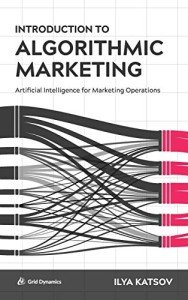
Introduction to Algorithmic Marketing: Artificial Intelligence for Marketing Operations
Discover how to leverage AI to transform your marketing strategies and drive impactful results
Product information
Product Review Score
4.08 out of 5 stars
127 reviewsProduct links
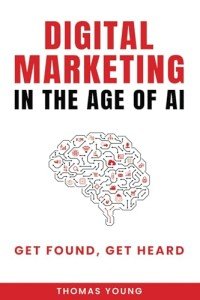
Digital Marketing in the Age of AI: Get Found, Get Heard
Discover effective strategies to elevate your brand and thrive in the digital landscape
Product information
$24.95
Product Review Score
4.37 out of 5 stars
69 reviewsProduct links
Generative AI for Marketing
Unlock the potential of AI to revolutionize your marketing strategy and drive success
Product information
$31.99 $27.25
Product Review Score
4.77 out of 5 stars
73 reviewsProduct links
AI in Marketing
Unlock the secrets of using artificial intelligence to boost your marketing strategies and drive business growth
Product information
$19.00
Product Review Score
4.41 out of 5 stars
40 reviewsProduct links
Personalized: Customer Strategy in the Age of AI
Unlock The Secrets to Tailoring Your Business Approach with AI-Driven Insights
Product information
$32.00 $19.30
Product Review Score
4.33 out of 5 stars
169 reviewsProduct links
Efficiency and Automation Benefits
Streamlining Marketing Operations
AI has dramatically transformed marketing operations by automating routine tasks and streamlining workflows, allowing marketing teams to achieve greater efficiency and productivity.
By handling repetitive and time-consuming processes, AI frees up valuable human resources to focus on strategic initiatives that require creativity and critical thinking[4].
As noted by marketing professionals at Backslash Creative, AI has significantly boosted team efficiency by automating routine tasks and providing deeper insights that enable more informed decision-making[4].
This automation extends across various marketing activities, from scheduling social media posts and email campaigns to updating customer databases and generating performance reports. The efficiency gains are substantial, with marketing teams able to accomplish more with fewer resources and in less time than was previously possible.
Marketing automation has become increasingly sophisticated, with AI systems capable of managing complex workflows and adapting to changing conditions without human intervention.
This operational efficiency translates directly to business outcomes, as marketing teams can execute more campaigns, respond more quickly to market changes, and allocate their time to high-value activities that drive growth and innovation.
Rapid Ideation and Content Generation
AI has revolutionized the ideation and content creation process, enabling marketers to generate and iterate on ideas at unprecedented speeds. As described by the team at Backslash Creative, AI serves as an "ever-ready brainstorming partner" that never tires and consistently produces new concepts[4].
This accelerated ideation capability allows marketing teams to explore a broader range of creative possibilities in less time, ultimately leading to more innovative and effective campaigns. The impact extends beyond simply generating ideas to actually producing content at scale.
AI-powered content generators have become increasingly sophisticated, capable of drafting text, developing ad copies, and even writing entire articles that are nearly indistinguishable from human-created content[6].
This capability is particularly valuable for content-intensive marketing strategies that require consistent production across multiple channels and formats.
While not every AI-generated idea or piece of content will be exceptional, the technology excels at producing quantity, which human marketers can then refine and elevate with their creative judgment[4].
This human-AI collaboration creates a powerful synergy that combines the efficiency and scalability of artificial intelligence with the nuanced understanding and creativity of human marketers.
Marketing Artificial Intelligence: AI, Marketing, and the Future of Business
Discover how AI is transforming marketing strategies and shaping the future of business success
Product information
$25.00
Product Review Score
4.48 out of 5 stars
116 reviewsProduct links
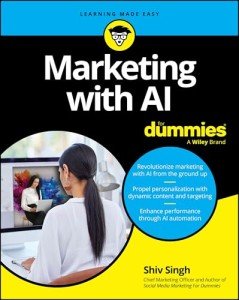
Marketing with AI For Dummies
Discover practical strategies to harness the power of AI in your marketing efforts
Product information
$29.99 $19.00
Product Review Score
4.82 out of 5 stars
48 reviewsProduct links
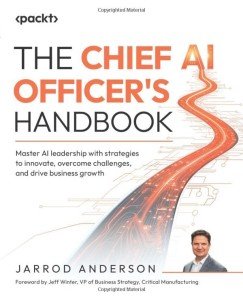
The Chief AI Officer's Handbook: Master AI leadership with strategies to innovate, overcome challenges, and drive business growth
Unlock the secrets to effective AI leadership and transform the way your business operates
Product information
$49.99 $39.99
Product Review Score
4.05 out of 5 stars
202 reviewsProduct links
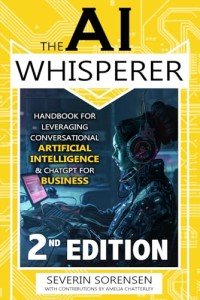
The AI Whisperer 2nd Edition: Handbook for Leveraging Conversational Artificial Intelligence and ChatGPT for Business
Unlock the secrets to using AI tools like ChatGPT to enhance your business strategies and streamline communication
Product information
$38.95
Product Review Score
4.88 out of 5 stars
26 reviewsProduct links
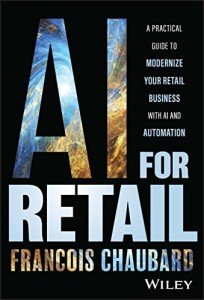
AI for Retail: A Practical Guide to Modernize Your Retail Business with AI and Automation
Unlock the secrets to enhancing your retail operations and boosting sales through the power of AI and automation
Product information
$34.00 $23.83
Product Review Score
4.85 out of 5 stars
30 reviewsProduct links
Data-Driven Insights and Decision Making
Enhanced Analytics and Pattern Recognition
AI has transformed marketing analytics by enabling the processing and interpretation of vast datasets that would be impossible for humans to manage manually. Unlike traditional analytics that often relied on sampling or simplified models, AI can analyze entire datasets in their full complexity, identifying subtle patterns and correlations that would otherwise remain hidden[1].
This comprehensive analysis extends across multiple data sources, including customer interactions, market trends, competitive movements, and external factors such as seasonality or economic indicators. The result is a much deeper understanding of what drives customer behavior and marketing performance.
By identifying these complex patterns, AI helps marketers understand the "why" behind performance metrics, not just the "what," enabling more informed strategic decisions. As described in the search results, AI algorithms excel at processing vast datasets, identifying patterns, and extracting actionable insights that drive tangible results[1].
This capability transforms marketers into data scientists armed with powerful tools to unlock the full potential of their marketing strategies. The pattern recognition extends beyond obvious correlations to discover non-intuitive relationships between variables that can lead to breakthrough insights and competitive advantages.
Real-Time Optimization and Decision Support
One of the most powerful advantages of AI in marketing is its ability to analyze data and optimize campaigns in real-time, creating a level of responsiveness that was previously impossible.
Traditional marketing campaigns often operated on predetermined schedules with periodic reviews and adjustments. In contrast, AI-powered marketing continuously monitors performance across channels and makes immediate adjustments based on real-time data[3]. This capability ensures that marketing resources are always allocated to their most effective use, maximizing return on investment.
Automated precision marketing has become the norm, with AI systems capable of adjusting targeting parameters, creative elements, and bidding strategies on a minute-by-minute basis to optimize performance[3]. These systems can detect subtle shifts in customer response patterns and quickly reallocate resources to capitalize on emerging opportunities or mitigate developing problems.
The decision support extends beyond campaign optimization to strategic planning, with AI providing data-driven recommendations for marketing investments, channel selection, and audience targeting.
This real-time optimization capability represents a fundamental shift in how marketing campaigns operate, moving from static plans to dynamic systems that continuously evolve based on performance data and changing market conditions.
Content Creation and Optimization
AI-Powered Content Generation
By 2025, AI has revolutionized content creation in marketing, providing tools that can generate high-quality content across various formats and channels.
While content creation has traditionally been a predominantly human task, AI has emerged as a reliable partner in the process, capable of drafting text, developing ad copies, and even writing entire articles[6]. These AI systems have become increasingly sophisticated, producing content that is increasingly difficult to distinguish from human writing.
This capability has transformed content marketing strategies by addressing one of the most persistent challenges: consistently producing enough high-quality content to meet demand across multiple channels.
Marketing teams can now leverage AI to generate initial drafts or variations of content, which human creators can then refine and enhance with their expertise and creative judgment. As noted in the research, AI's role in creative content generation has been transformative, not by replacing human creativity but by augmenting it[4].
AI tools have enabled marketing teams to explore new creative avenues, enhancing content relevance and engagement while adding sophistication to the creative process[4].
This human-AI collaboration creates a powerful synergy that combines the efficiency and scalability of artificial intelligence with the nuanced understanding and creativity that only humans can provide.
### SEO and Content Optimization
AI has transformed how marketers optimize content for search engines and audience engagement, moving beyond basic keyword stuffing to sophisticated analysis that considers context, intent, and competitive positioning.
AI tools have become essential for content optimization, analyzing trends, keywords, and competitors to inform content strategies that ensure higher visibility and engagement[6].
These systems can evaluate existing content against complex algorithms that mirror search engine ranking factors, identifying specific improvements that will enhance performance. The optimization extends beyond traditional SEO considerations to include readability, emotional impact, and alignment with target audience preferences.
AI systems can analyze successful content across the web to identify patterns in structure, tone, and formatting that correlate with higher engagement, providing marketers with data-driven recommendations for content creation.
This capability enables marketing teams to produce content that not only ranks well in search results but also resonates with audiences and drives desired actions.
The continuous learning aspect of AI means that these optimization systems constantly improve their recommendations based on performance data, adapting to changes in search algorithms and audience preferences.
By streamlining the optimization process, AI allows marketing teams to focus on creating valuable content while ensuring it reaches the intended audience and achieves business objectives.
Enhanced Customer Experiences
Conversational AI and 24/7 Engagement
AI has dramatically transformed customer engagement through conversational interfaces that provide immediate, personalized assistance around the clock.
Unlike human support teams that operate within limited hours, AI-powered chatbots and virtual assistants offer 24/7 availability, ensuring that customers receive prompt responses whenever they have questions or need support[1].
These conversational AI systems have evolved significantly by 2025, capable of understanding natural language inputs, maintaining context throughout conversations, and providing relevant, helpful responses that closely mimic human interactions.
The impact on customer experience is substantial, as these systems eliminate wait times and provide consistent service quality regardless of when customers choose to engage.
Beyond simple FAQ responses, advanced conversational AI can guide customers through complex processes, recommend products based on stated preferences, and even anticipate needs based on interaction patterns.
This capability creates a seamless experience that meets the modern customer's expectation for immediate service and personalized attention.
The continuous learning nature of AI means these systems constantly improve through interactions, becoming more adept at understanding customer intent and providing relevant responses.
For businesses, this technology not only improves customer satisfaction but also generates valuable insights from conversations that can inform product development, marketing messages, and service improvements.
Seamless Omnichannel Experiences
AI has enabled marketers to create cohesive, personalized customer journeys across multiple touchpoints, solving one of the most persistent challenges in modern marketing.
Traditional marketing approaches often struggled with channel fragmentation, where customer experiences varied significantly between websites, mobile apps, social media, and physical locations.
AI systems have become sophisticated enough to maintain a unified view of each customer across all channels, ensuring consistent and personalized experiences regardless of how or where customers choose to engage[1][3].
These systems analyze user behavior across platforms, purchase history, and content preferences to create detailed customer personas that inform interactions across all touchpoints[6].
The result is a seamless experience where customers can start an interaction in one channel and continue it in another without losing context or having to repeat information.
This omnichannel capability extends beyond simple consistency to include intelligent adaptation, where experiences are optimized for each channel's unique characteristics while maintaining overall journey coherence.
For example, a customer who browses products on a mobile app might receive tailored recommendations when they later visit the website, and complementary suggestions when they enter a physical store.
This seamless integration across channels creates a more intuitive and satisfying customer experience that strengthens brand relationships and drives higher engagement and conversion rates.
Scalability and Resource Optimization
Maximizing Marketing Impact with Limited Resources
In an era where marketing teams are increasingly pressured to "do more with less," AI has emerged as a critical solution for maximizing impact while optimizing resource utilization.
The ability to automate and streamline processes enables marketing teams to handle larger campaigns more efficiently without proportionally increasing headcount or budgets[7].
This scalability advantage is particularly valuable in competitive markets where marketing resources are constrained but expectations for results remain high.
AI enables marketing teams to expand their capabilities without increasing staffing, effectively augmenting existing skillsets and allowing specialists to focus on strategic work rather than routine tasks[7].
For example, content management becomes significantly more efficient with AI-powered search tools that instantly locate assets, ensuring teams have access to the right resources when needed[7].
This resource optimization extends to budget allocation as well, with AI systems continuously analyzing performance data to identify the most effective channels and tactics, then automatically reallocating spending to maximize returns.
The result is a more agile marketing operation that can respond quickly to opportunities and challenges while maintaining efficiency.
This capability has become increasingly important as marketing teams face growing expectations to deliver personalized experiences across more channels with carefully controlled budgets.
Competitive Advantage and Cost Savings
AI adoption in marketing has created significant competitive advantages and cost savings for businesses that have successfully integrated these technologies into their operations.
Organizations implementing AI-driven marketing benefit from improved efficiency, enhanced performance, and optimized resource allocation that translate directly to business outcomes. As noted in the research, AI in marketing is among the business functions where the technology is predicted to have the most financial impact[5].
This impact comes from multiple sources, including reduced operational costs through automation, improved conversion rates through personalization, and optimized marketing spend through data-driven decision making.
Companies that embrace AI marketing gain a competitive edge through their ability to respond more quickly to market changes, deliver more relevant customer experiences, and identify opportunities that competitors might miss.
For example, AI-powered influencer marketing can match products with influencers whose audiences align with brand values, creating more effective partnerships and better returns on marketing investments[5].
As Bernard Marr noted in Forbes, marketers who aren't using AI are "missing out on the benefits of what is possibly the most transformational technology"[5].
The competitive advantage becomes self-reinforcing as AI systems continuously learn and improve from new data, creating a growing performance gap between AI-enabled marketing organizations and those relying on traditional approaches.
This advantage is particularly valuable in competitive markets where small differences in marketing effectiveness can translate to significant differences in market share and profitability.
Future Trends and Strategic Implementation
Emerging AI Marketing Technologies for 2025
As we progress through 2025, several emerging AI technologies are reshaping the marketing landscape and offering new capabilities for innovative businesses.
Predictive analytics has advanced significantly, moving beyond basic forecasting to sophisticated systems that can anticipate customer needs with remarkable accuracy[3].
These systems analyze complex patterns across multiple data sources to predict not just what customers might want, but precisely when they will want it, enabling perfectly timed marketing interventions.
Hyper-personalization technologies have also evolved, with AI now capable of analyzing user behavior across platforms, purchase history, and content preferences to create detailed customer personas that inform highly customized messaging[6].
This level of personalization creates experiences that feel intuitively aligned with customer preferences rather than overtly targeted.
Real-time optimization capabilities have become more sophisticated, with AI systems now able to adapt entire campaigns instantaneously based on performance data and changing market conditions[3].
For businesses looking to stay at the forefront of marketing innovation, understanding and selectively implementing these emerging technologies has become essential.
The most successful organizations approach AI implementation strategically, identifying specific business challenges that AI can address rather than adopting technology for its own sake.
This thoughtful approach ensures that investments in AI marketing technology deliver tangible business outcomes rather than simply following industry trends.
Strategic Implementation for Sustainable Results
Successfully implementing AI in marketing requires a strategic approach that addresses technology integration, organizational alignment, and continuous improvement.
As marketing AI expert Roetzer noted, the technology is "extremely approachable" and businesses can start with small experiments rather than large-scale transformations[5].
This incremental approach allows organizations to test AI capabilities, demonstrate value, and build internal confidence before expanding to more comprehensive implementations.
Effective AI marketing strategies begin with clear business objectives rather than technology-driven initiatives, ensuring that implementation efforts address specific performance challenges or market opportunities.
Data strategy represents a critical success factor, as AI systems require high-quality data to deliver accurate insights and effective optimizations.
Organizations must establish robust data governance frameworks that ensure their AI systems receive reliable inputs across sufficient historical ranges to enable effective pattern recognition and predictive modeling.
Change management also demands particular attention, as AI adoption fundamentally transforms established workflows, performance metrics, and skill requirements.
The most successful implementations typically include comprehensive training programs that help marketing teams understand how to collaborate effectively with AI systems, viewing the technology as a performance multiplier rather than a replacement threat.
By approaching AI implementation as a strategic transformation initiative rather than a simple technology deployment, organizations position themselves to establish sustainable competitive advantages that drive long-term business success.
Conclusion
The integration of artificial intelligence into business marketing represents a transformative force that has fundamentally changed how companies engage with customers, optimize campaigns, and drive business results.
The advantages of AI in marketing are multifaceted and substantial, spanning improved personalization, enhanced efficiency, data-driven decision making, and scalable customer experiences.
AI has enabled unprecedented levels of personalization through sophisticated analysis of customer data and behavior patterns, creating experiences that anticipate needs and deliver relevant content at precisely the right moment.
The efficiency gains through automation have freed marketing teams from routine tasks, allowing them to focus on strategic initiatives while AI handles data processing, content optimization, and campaign management at scale.
Perhaps most significantly, AI has transformed marketing decision-making from intuition-based approaches to data-driven strategies that leverage complex pattern recognition to identify opportunities and optimize performance in real-time.
As we progress through 2025, the strategic implementation of AI in marketing continues to create competitive advantages for forward-thinking organizations.
Those that successfully integrate these technologies are achieving better customer engagement, higher conversion rates, and improved return on marketing investments.
The future of marketing clearly belongs to organizations that can effectively combine human creativity and strategic thinking with AI's computational power and pattern recognition capabilities.
While challenges remain, particularly around data privacy, maintaining the human touch, and effective implementation, the advantages of AI in business marketing have proven substantial enough to make adoption not merely beneficial but increasingly essential for companies seeking to remain competitive in an increasingly digital marketplace.
As the technology continues to evolve, the gap between AI-enabled marketing organizations and traditional approaches will likely widen, making strategic adoption of these technologies a critical priority for marketing leaders focused on long-term success.
Citations:
[1] The Pros and Cons of AI in Marketing: An Analysis - SurveySparrow https://surveysparrow.com/blog/the-pros-and-cons-of-ai-in-marketing/
[2] The Role of AI in Marketing and How to Use It - Invoca https://www.invoca.com/blog/ai-marketing-how-to-use-it
[3] Artificial intelligence (AI) and marketing: 2025 trends - Bannerflow https://www.bannerflow.com/blog/ai-marketing-2025-trends
[4] The pros and cons of AI in marketing - Edmond Business https://edmondbusiness.com/2023/12/pros-cons-ai-marketing/
[5] Artificial Intelligence And The Future Of Marketing - Forbes https://www.forbes.com/sites/bernardmarr/2022/09/09/artificial-intelligence-and-the-future-of-marketing/
[6] The Impact of AI in Marketing in 2025 https://krausgroupmarketing.com/news/the-impact-of-ai-in-marketing-in-2025/
[7] AI Marketing Basics (Plus Top 6 Benefits) | Canto https://www.canto.com/blog/ai-marketing/
[8] Master AI Marketing in 2025: Future-Proof Your Success - Digivizer https://digivizer.com/blog/ai-marketing-performance-future/
[9] The Advantages and Disadvantages of Using AI in Marketing - WebFX https://www.webfx.com/blog/marketing/ai-marketing-advantages-disadvantages/
[10] How AI is Impacting Digital Marketing https://sps.wfu.edu/articles/how-ai-impacts-digital-marketing/
[11] 6 Benefits of Using AI in Digital Marketing - Metrics Watch https://metricswatch.com/ai-in-digital-marketing
[12] 7 Benefits of Artificial Intelligence (AI) for Business https://online.uc.edu/blog/business-benefits-artificial-intelligence-ai/
[13] AI in Marketing in 2025: Smart Automation and Brave Brand Building https://www.cmswire.com/digital-marketing/ai-in-marketing-in-2025-smart-automation-and-brave-brand-building/
[14] AI in Marketing: Implementation, Features, Benefits, Feature | Creatio https://www.creatio.com/glossary/ai-in-marketing
[15] AI Marketing Trends to Watch in 2025 | NoGood https://nogood.io/2025/01/06/ai-marketing-trends-2025/
[16] AI in marketing: A complete guide | SAP https://www.sap.com/resources/ai-in-marketing
[17] AI in marketing statistics: how marketers use AI in 2025 https://www.surveymonkey.com/mp/ai-marketing-statistics/
[18] AI in Marketing | IBM https://www.ibm.com/think/topics/ai-in-marketing
[19] 5 AI Marketing Trends to Watch in 2025 (+How They'll Impact You) https://www.wordstream.com/blog/ai-marketing-trends-2025
[20] Pros And Cons Of AI In Marketing - eLearning Industry https://elearningindustry.com/advertise/elearning-marketing-resources/blog/pros-and-cons-of-ai-in-marketing-tips-for-elearning-marketers